
What does this career involve?
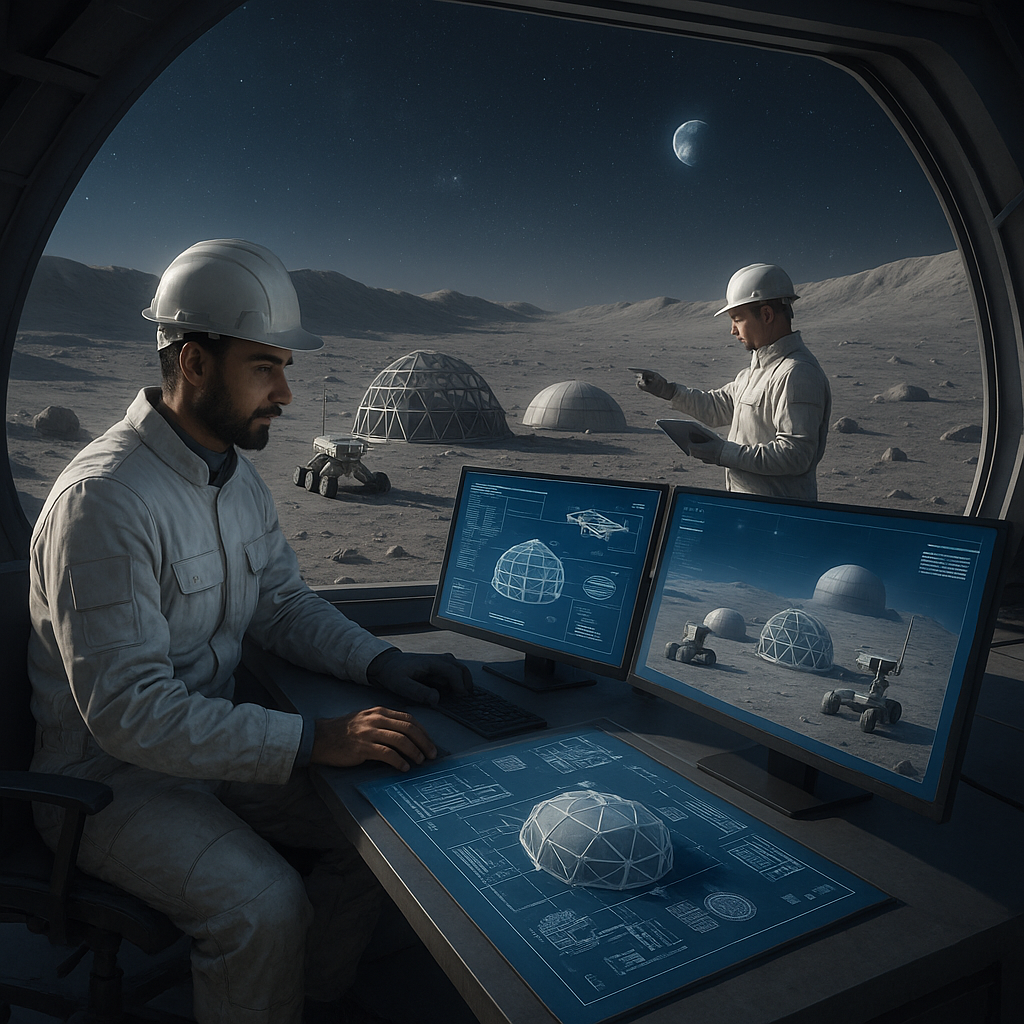
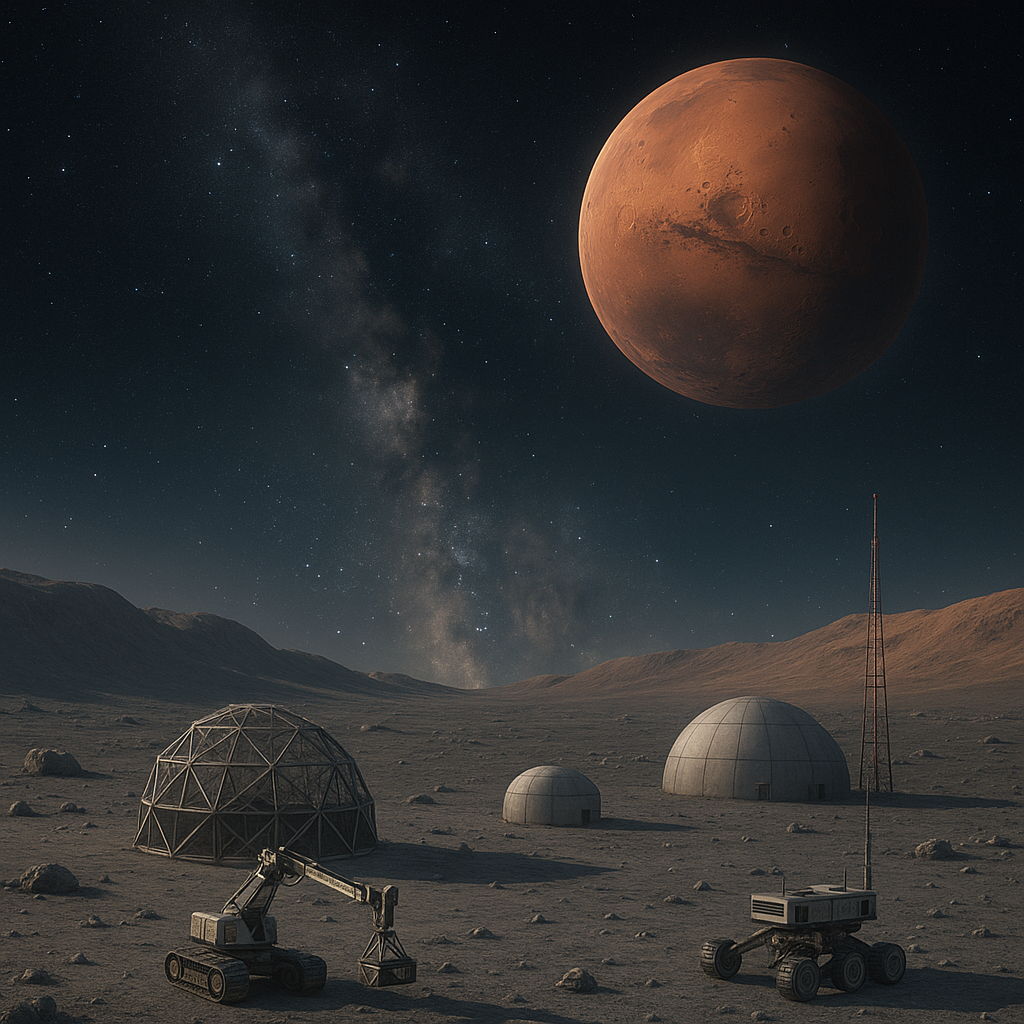
Civil engineers on Earth design the structures everyone relies on: foundations, roads, bridges, buildings. On the Moon there is no air, gravity is a sixth of Earth’s, temperatures swing by hundreds of degrees and the ground is a sharp, clinging dust called regolith. A lunar or Martian civil engineer works out how to build in those conditions, probably by robot and probably from local material, before the first crews arrive to live there.
Why is this a future career?
Not yet: decades away (autumn 2026). In April 2026 four astronauts flew around the Moon on Artemis II, the first crewed lunar mission since 1972, and NASA is aiming to land people near the lunar south pole in 2028. A permanent base would come after that, and Mars later still. The engineering questions, from how to make concrete out of regolith to how to shield people from radiation, are being worked on in universities and space agencies now.
Skills for this career
Related Technologies of the 4IR
3D Printing

Robotics

Nanotechnology

Autonomous Vehicles

The Reality Continuum (AR/VR)

Where to start
Maths, physics and design and technology are the core subjects. The route in is civil or structural engineering, through a degree or a degree apprenticeship, followed by research into space construction.